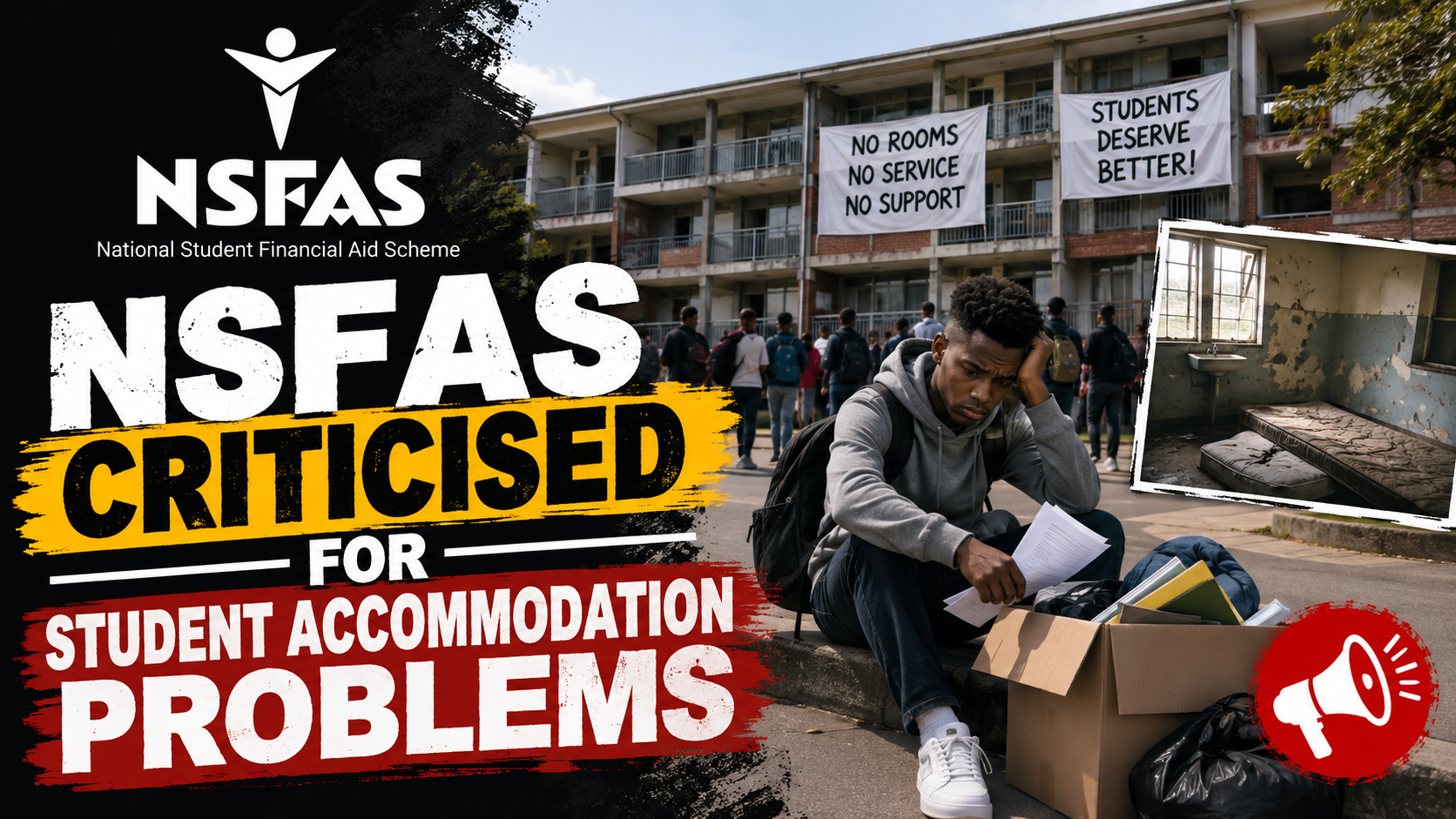
NSFAS Criticised For Student Accommodation. The National Student Financial Aid Scheme (NSFAS) is facing renewed criticism over ongoing problems affecting student funding and accommodation. Public Protector Kholeka Gcaleka has identified student accommodation as an area requiring urgent intervention following an investigation into alleged maladministration at NSFAS.
Gcaleka shared an update on the investigation during a media briefing on Tuesday, 18 August 2026. According to the Public Protector, concerns relating to the administration, governance, funding, coordination and oversight of student financial aid were found to be substantiated.
NSFAS Student Accommodation Under Scrutiny
Student accommodation emerged as one of the major areas of concern during the investigation. Gcaleka highlighted delays in the payment of accommodation allowances, which can leave students struggling to secure or maintain suitable housing.
The investigation also found weaknesses in the accreditation and verification of private student accommodation. These shortcomings may increase the risk of fraud and exploitation while contributing to housing instability among students who depend on NSFAS support.
Following on-site inspections at selected higher education institutions, the Public Protector’s office decided to launch a separate own-initiative systemic investigation into student accommodation.

Gcaleka urged the government to address the problems surrounding NSFAS-funded accommodation without waiting for the conclusion of the new investigation.

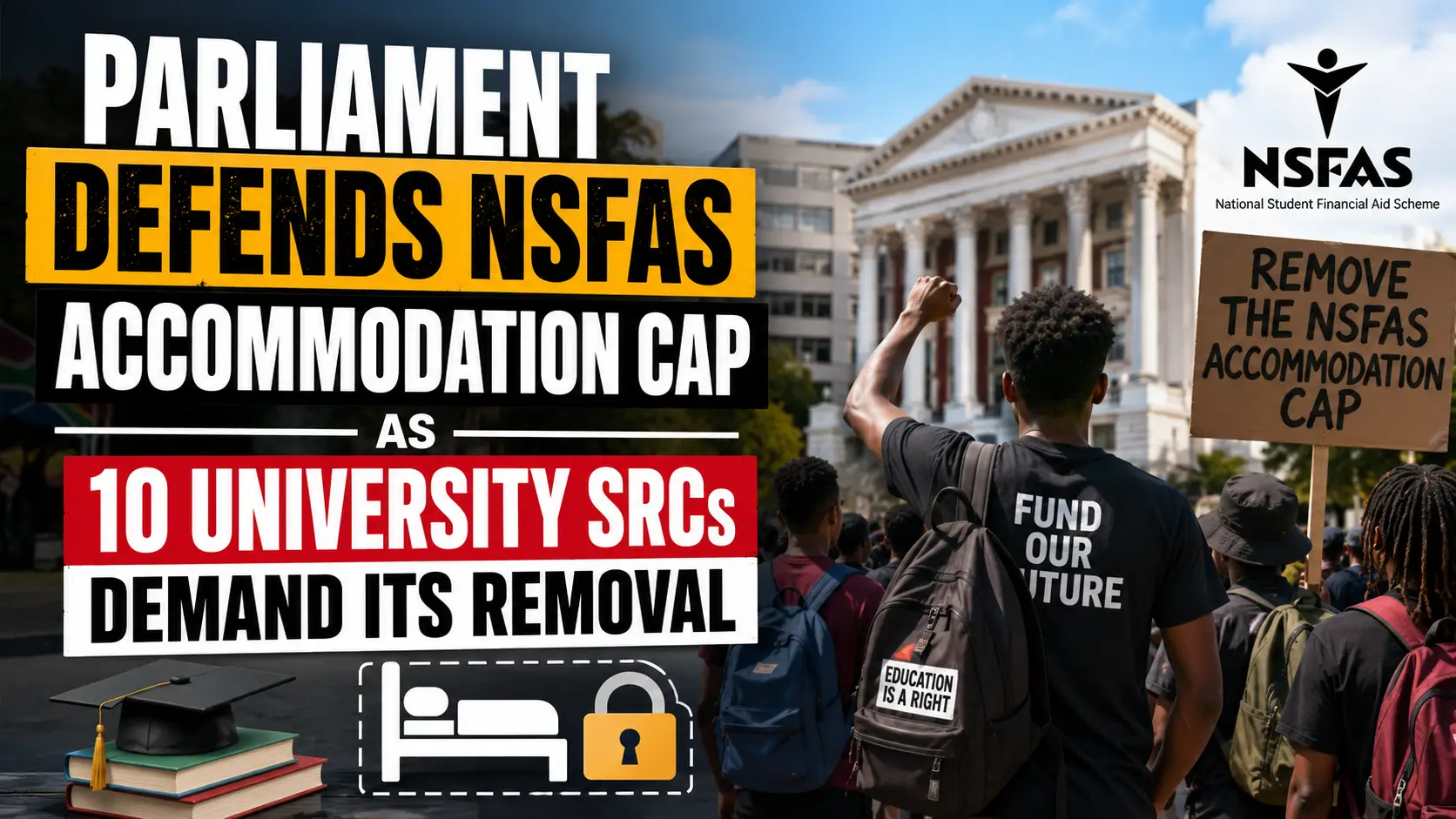
Student Representative Councils (SRCs) at universities across South Africa have also been campaigning against aspects of the NSFAS accommodation policy. Much of the student concern has focused on the accommodation cap, which limits the amount NSFAS will pay toward student housing.
NSFAS Funding Problems Affect Students
The Public Protector’s broader investigation was launched after receiving complaints about alleged administrative problems affecting students’ access to financial aid and, ultimately, higher education.
During the investigation, the office identified wider challenges within South Africa’s higher education funding system. These included inadequate access to tuition funding, weaknesses in existing funding mechanisms, accommodation difficulties, funding criteria and delays in the payment of allowances.
Students have also faced delays in receiving funding confirmations, allowance payments and appeal outcomes. In some cases, delays in settling tuition accounts reportedly resulted in students having their qualifications withheld.
These administrative problems can create significant uncertainty for students who rely on NSFAS funding to continue their studies.
40,000 Students Were Improperly Funded
The investigation also identified concerns about students receiving NSFAS funding despite not meeting the applicable financial eligibility requirements.
According to the Public Protector, approximately 40,000 students were improperly funded because their household income exceeded the R350,000 threshold. The value of the improper funding was estimated at R5.1 billion.
However, around R2 billion of the amount has reportedly been recovered.
The issue comes at a time when NSFAS is already facing significant financial pressure. Higher Education and Training Minister Buti Manamela recently announced that the fund is dealing with a funding shortfall of approximately R15 billion.
NSFAS Governance and Administration Concerns
The Public Protector also raised concerns about governance instability and administrative weaknesses within NSFAS.
Gcaleka said information gathered during the preliminary investigation pointed to persistent problems with governance, administration and internal systems. She noted that NSFAS has been placed under administration three times over the past eight years.
According to the Public Protector, these weaknesses have affected NSFAS’s ability to effectively fulfil its statutory responsibilities, particularly as an organisation responsible for public funds and supporting financially vulnerable students.
The investigation found recurring delays in funding decisions, appeal outcomes and allowance payments.
Students Face Food and Accommodation Insecurity
The consequences of these delays extend beyond administrative inconvenience. Students who depend on NSFAS funding may struggle to afford food, accommodation and other essential expenses when payments are delayed.
The Public Protector said the problems had contributed to food insecurity, accommodation instability and exposure to unsafe living conditions.
These findings demonstrate how administrative failures within a student funding system can directly affect students’ dignity, welfare and ability to participate successfully in higher education.
For many students, NSFAS support is essential for remaining enrolled and completing their qualifications. Delays in funding or accommodation payments can therefore have serious academic and personal consequences.
Separate Investigation Into Student Accommodation
The decision to launch a separate systemic investigation is expected to bring greater scrutiny to the way student accommodation is funded, accredited and monitored.
The investigation could examine whether existing systems are sufficiently effective to ensure that students receive safe and suitable accommodation and that public funds are properly managed.
Conclusion
The latest findings also increase pressure on NSFAS and the government to address persistent funding and accommodation challenges. Students, universities and student representatives are likely to continue demanding improvements to the administration of financial aid and accommodation support.
As the separate accommodation investigation progresses, its findings could provide further insight into the problems affecting NSFAS-funded students and the measures needed to improve the system.