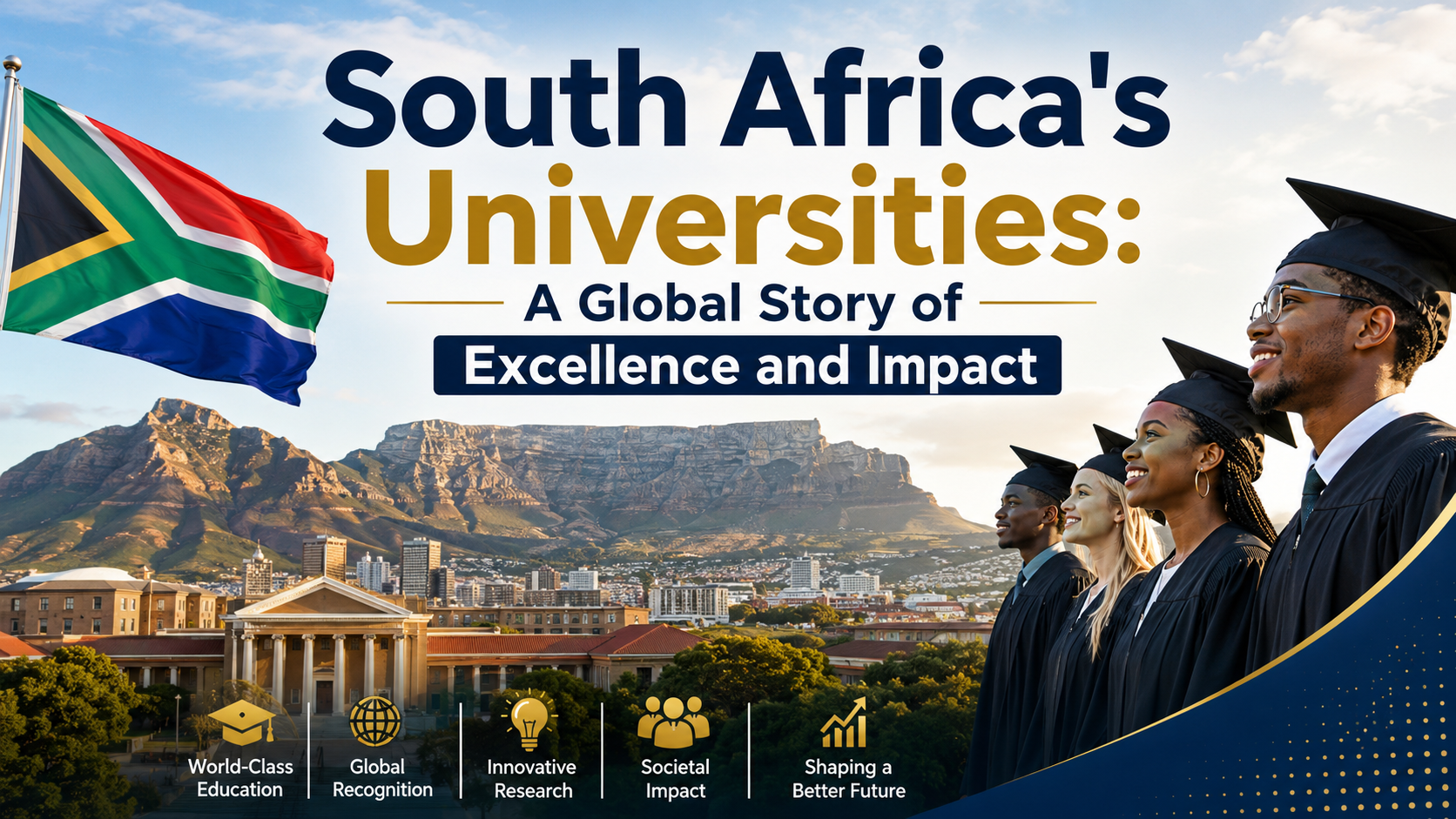
Global Story of Excellence and Impact. South Africa has established one of the strongest higher education systems in Africa, with universities that consistently earn international recognition for academic excellence, groundbreaking research, and innovation. These institutions have become powerful drivers of economic growth, scientific discovery, and social development. Their success reflects decades of investment in education and highlights the country’s commitment to building a knowledge-based economy that benefits both South Africa and the global community.
South Africa World-Class Higher Education System

The country’s universities are widely respected for producing highly skilled graduates, conducting impactful research, and collaborating with international institutions. As global university rankings continue to recognize South African institutions, they have become symbols of excellence that attract students, researchers, and academic partnerships from around the world.
Higher education plays a crucial role in developing future leaders, entrepreneurs, engineers, doctors, scientists, and policymakers. South African universities are preparing graduates with the knowledge and practical skills needed to solve complex challenges while contributing to economic development and technological innovation.
International Recognition and Global Rankings
Several South African universities regularly appear among the world’s leading institutions in respected international rankings. Their strong performance demonstrates the quality of teaching, research output, graduate employability, and academic reputation.
The University of Cape Town (UCT) continues to be recognized as one of Africa’s highest-ranked universities, earning praise for its research excellence, international collaborations, and outstanding academic programs.


The University of the Witwatersrand (Wits) has also strengthened its international reputation through exceptional research achievements, producing graduates who make valuable contributions across multiple industries worldwide.

These rankings are not simply a matter of prestige—they showcase South Africa’s growing influence in global education and research.
Research That Solves Real-World Problems
One of the greatest strengths of South African universities is their commitment to research that addresses national and global challenges. Researchers are developing innovative solutions in healthcare, agriculture, engineering, renewable energy, climate change, artificial intelligence, and environmental sustainability.
Medical researchers continue to make significant contributions in infectious disease prevention, vaccine development, and public health. Their work has received international recognition and has helped improve healthcare outcomes across Africa and beyond.
Similarly, engineering and technology departments are creating innovative solutions that support infrastructure development, digital transformation, and industrial growth.
Leading Innovation in Healthcare
South African universities have become global leaders in medical research. Scientists continue to study diseases such as HIV, tuberculosis, cancer, and emerging infectious diseases while developing new treatment methods and improving healthcare delivery.
Research teams are also exploring advanced biotechnology, genetics, and pharmaceutical sciences to improve patient care and contribute to international medical discoveries. These efforts strengthen South Africa’s reputation as a hub for scientific excellence.
Advancing Renewable Energy and Sustainability
As countries focus on sustainable development, South African universities are actively researching renewable energy technologies, climate resilience, and environmental conservation.
Researchers are investigating cleaner energy systems, solar power, wind energy, water management, and sustainable agricultural practices. Their findings support government policies while helping industries adopt environmentally friendly solutions.
Universities are also working with businesses and international organizations to create practical innovations that improve energy security and reduce environmental impacts.
Agriculture, Food Security, and Technology
Food security remains an important priority for South Africa, and universities are contributing through agricultural research and technological innovation.
Scientists are developing improved farming techniques, climate-smart agriculture, biotechnology applications, and better livestock management systems. These innovations help farmers increase productivity while protecting natural resources for future generations.
Artificial intelligence and digital technologies are also transforming agriculture through precision farming, smart irrigation, and data-driven decision-making.
Building Future Leaders Through Education
South African universities do much more than conduct research. Every year, they educate thousands of students who become professionals, entrepreneurs, educators, and innovators across various sectors.
Universities are expanding access to quality education through online learning, distance education, scholarships, and research opportunities. This ensures that talented students from diverse backgrounds can contribute to national development.
Graduates from South African institutions continue to work successfully across Africa and internationally, strengthening the country’s global reputation.
International Collaboration and Academic Partnerships
Collaboration with universities around the world has become a major strength of South Africa’s higher education sector. International partnerships encourage student exchanges, joint research projects, technology transfer, and academic innovation.
These collaborations provide opportunities for South African researchers to participate in solving global challenges while bringing international expertise back to local communities.
Hosting major international academic conferences further demonstrates South Africa’s growing role as a global center for education and research.
Why South Africa’s Universities Matter
Higher education remains one of the country’s most valuable long-term investments. Universities generate knowledge, create skilled professionals, support innovation, and provide practical solutions to national challenges.
Their research contributes to healthcare improvements, technological advancement, environmental sustainability, food security, and economic development. At the same time, they inspire future generations to pursue education, creativity, and scientific discovery.
Conclusion
South Africa’s universities have earned their place among the world’s leading institutions through academic excellence, innovative research, and meaningful contributions to society. Their achievements demonstrate the country’s intellectual strength and commitment to solving local and global challenges.
As these institutions continue expanding their international partnerships, producing world-class graduates, and driving scientific breakthroughs, they will remain essential to South Africa’s future prosperity. Investing in higher education is not only an investment in students—it is an investment in innovation, economic growth, and a brighter future for the nation and the world.