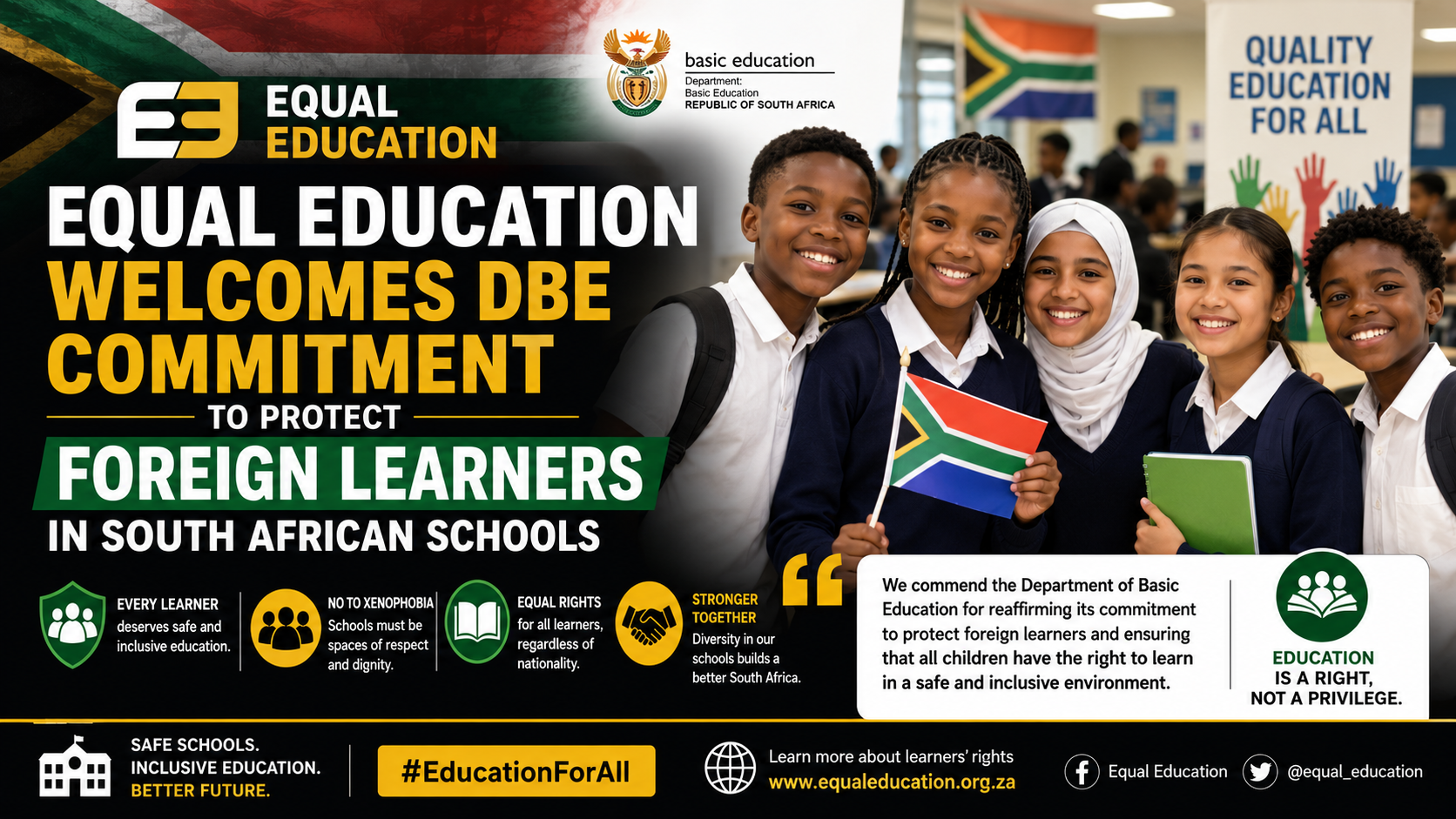
Equal Education Welcomes DBE Commitment. South Africa education system has taken another important step toward ensuring that every child can learn in a safe and welcoming environment. Equal Education has welcomed the Department of Basic Education’s (DBE) Circular S7 of 2026, describing it as a significant move to protect foreign learners and reinforce the constitutional right to education for all children. As schools begin the third academic term, the organization is encouraging provincial education departments, school leaders, and communities to fully implement the new circular.

The announcement comes at a time when concerns over discrimination, xenophobia, and violence against foreign nationals have increased in some communities. Equal Education believes the circular sends a strong message that schools must remain safe spaces where every learner, regardless of nationality or documentation status, is treated with dignity and respect.
DBE Circular Strengthens Learners Rights
According to Equal Education, the Department of Basic Education’s Circular S7 of 2026 clearly reinforces the constitutional right of every child to receive a basic education in South Africa. The circular emphasizes that all learners have the right to attend school in an environment free from violence, intimidation, discrimination, and vigilantism.
The organization welcomed the department’s efforts to create stronger protections for learners, saying that the circular provides practical guidance to schools on how they should respond to incidents involving xenophobia or threats against foreign learners.
Equal Education also confirmed that it worked alongside the Department of Basic Education during the development of the circular as part of ongoing initiatives aimed at improving school safety across the country.


Protection Against Xenophobia and Violence
One of the key features of the circular is its clear stance against xenophobia and violence targeting foreign nationals. Equal Education highlighted that the document extends the application of the Gauteng High Court judgment in the case of Kopanang Africa Against Xenophobia and Others v Operation Dudula and Others.

The court ruling prohibits harassment, intimidation, assault, and discrimination against people identified as foreign nationals, including school learners, teachers, and other staff members.
By reinforcing this legal protection, the DBE aims to ensure that schools remain inclusive environments where all children can focus on their education without fear of abuse or exclusion.
Equal Education Calls for Immediate Implementation
While welcoming the circular, Equal Education stressed that its success depends on effective implementation. The organization has called on Provincial Education Departments, School Governing Bodies (SGBs), principals, teachers, and school communities to put the new guidelines into practice immediately.
The group believes that simply issuing a policy is not enough. Schools must actively communicate the contents of the circular to educators, parents, learners, and staff while ensuring that everyone understands their responsibilities in maintaining a safe learning environment.
Equal Education noted that recent incidents involving xenophobic attacks and violent vigilantism demonstrate why urgent action is necessary.
Every Child Has the Right to Education
A major message contained in the DBE circular is that no learner should ever be denied access to education because of their nationality or immigration status.
Equal Education explained that the circular clearly states that schools may not refuse admission to children simply because they are undocumented or foreign nationals. Every child living in South Africa has the constitutional right to receive a basic education, regardless of where they come from or whether they possess official immigration documents.
This clarification is particularly important for vulnerable families who may fear that their children could be excluded from school due to documentation challenges.
The organization emphasized that education is a fundamental human right and should never be restricted because of a learner’s background.
Schools Must Strengthen Safety Measures
The Department of Basic Education is also encouraging schools to review and strengthen their School Safety Plans.
According to the circular, schools should work closely with the South African Police Service (SAPS) whenever necessary to ensure the safety of learners, teachers, and staff members.
The guidelines also recommend providing psychosocial support to learners who have experienced violence, intimidation, harassment, or discrimination. Emotional and mental health support can help affected students recover from traumatic experiences and continue their education successfully.
By combining physical security measures with emotional support services, schools can create a more inclusive and supportive learning environment.
Building Inclusive School Communities
Equal Education believes that protecting foreign learners benefits the entire education system. Schools that promote diversity, inclusion, and respect help learners develop important values that extend beyond the classroom.
The organization encouraged principals to ensure that educators discuss the circular with learners and parents while taking immediate action against any incidents involving discrimination or xenophobia.
Creating awareness among students and families can help prevent conflict and promote understanding between learners from different backgrounds.
Equal Education said schools should remain places where every child feels welcome, respected, and protected regardless of nationality, language, ethnicity, or documentation status.
Conclusion
Equal Education support for the Department of Basic Education’s Circular S7 of 2026 highlights the importance of protecting every learner’s right to education. The circular reinforces existing constitutional protections by making it clear that discrimination, violence, intimidation, and xenophobia have no place in South African schools.
As the third school term begins, Equal Education is urging education authorities, school governing bodies, principals, teachers, parents, and communities to work together to fully implement the new guidelines. Through stronger safety measures, greater awareness, and equal treatment for all learners, South African schools can continue to provide safe, inclusive, and supportive environments where every child has the opportunity to learn, grow, and succeed.