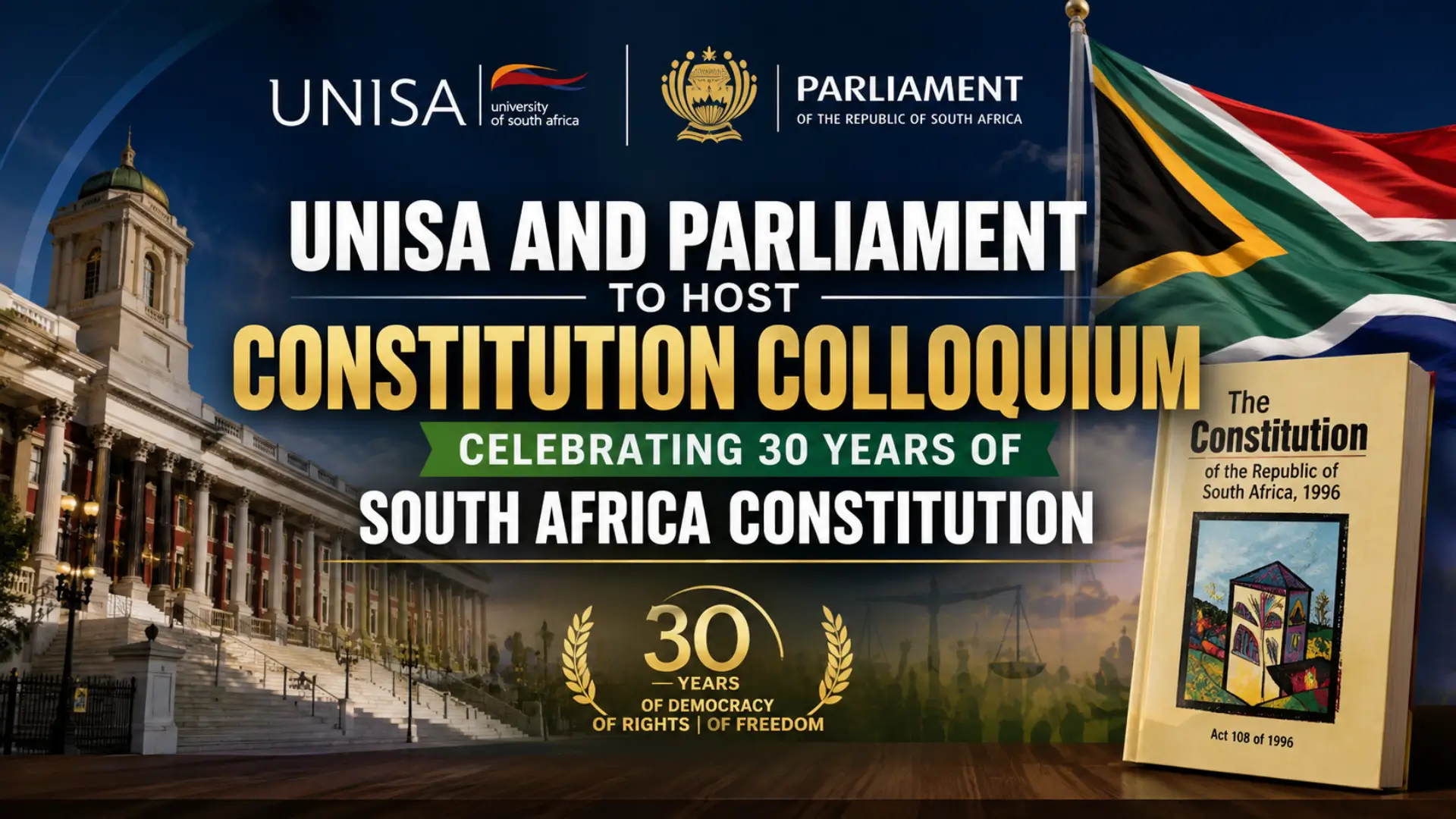
UNSIA and Parliament to Host Constitution. The University of South Africa (Unisa), in partnership with the Parliament of South Africa, is set to host a special Constitution Colloquium in Cape Town to celebrate the 30th anniversary of South Africa’s democratic Constitution. The event will bring together government leaders, constitutional experts, academics, legal professionals, civil society representatives, and students to discuss the Constitution’s lasting impact on democracy and its role in addressing modern-day challenges.

The commemorative event highlights the importance of South Africa’s Constitution, which has served as the foundation of the country’s democratic system since its adoption. It also provides an opportunity to reflect on the achievements of the past three decades while exploring how constitutional principles can continue to guide the nation in an increasingly complex and rapidly changing world.
Unisa and Parliament Join Forces
The Constitution Colloquium is being organized through a collaboration between the University of South Africa (Unisa) and the Parliament of South Africa. Both institutions aim to promote constitutional education, democratic values, and meaningful public dialogue through this important event.
Held under the theme “Celebrating 30 Years of South Africa’s Constitution in a Rapidly Changing World,” the colloquium will encourage thoughtful discussions on the Constitution’s relevance in today’s social, political, and economic landscape.
The event demonstrates the continued commitment of both Unisa and Parliament to strengthening democratic governance and ensuring that constitutional principles remain central to South Africa’s future development.

Date and Venue of the Colloquium
The Constitution Colloquium is scheduled to take place on Friday, 22 May, at the temporary National Assembly Chamber, commonly known as the Dome, located at the corner of Commercial Road and Plein Street in Cape Town.
The programme will officially begin at 11:30 a.m., with hundreds of invited guests expected to participate throughout the day’s discussions.
Celebrating 30 Years of South Africa’s Constitution
South Africa’s Constitution is widely regarded as one of the most progressive constitutions in the world. Since its adoption, it has protected fundamental human rights, promoted equality, and established democratic institutions that uphold the rule of law.
This year’s colloquium forms part of the national celebrations marking three decades of constitutional democracy. It provides an opportunity to reflect on how the Constitution has shaped South Africa’s political system, strengthened democratic governance, and protected the rights of millions of citizens.
Participants will also examine how constitutional values can continue to respond to emerging challenges, including technological developments, economic inequality, climate concerns, and changing global political dynamics.
More Than 250 Participants Expected
According to Parliament, more than 250 participants are expected to attend the event.
The audience will include representatives from various sectors, such as:
- Political leaders
- University academics
- Constitutional scholars
- Legal professionals
- Civil society organizations
- Students
- Members of the diplomatic community
The broad representation is intended to encourage diverse perspectives and meaningful discussions on constitutional governance and democratic development.
Former President Thabo Mbeki Among Expected Guests
One of the distinguished guests expected to attend the colloquium is Former President Thabo Mbeki, who currently serves as the patron of the Thabo Mbeki Foundation.
His participation is expected to add valuable historical insight into South Africa’s democratic journey and constitutional development. Alongside other experts and public leaders, Mbeki is likely to contribute to discussions about strengthening democratic institutions and protecting constitutional values for future generations.
Key Topics to Be Discussed
The Constitution Colloquium will focus on several important issues affecting South Africa’s democracy today.
Some of the major discussion areas include:
- Constitutional advancement over the past 30 years.
- The future of democratic governance.
- Protecting constitutional rights in a changing society.
- The role of public participation in democracy.
- Addressing emerging global and national challenges.
- Strengthening constitutional institutions.
- Promoting responsible leadership and accountability.
These discussions aim to generate practical ideas that will help ensure the Constitution continues to serve as a strong foundation for South Africa’s democratic future.
Why the Colloquium Matters
As South Africa continues to navigate economic, political, and social challenges, events like this provide an important platform for reflection and collaboration.
The Constitution remains the country’s highest law, guaranteeing freedoms, equality, and justice for all citizens. By bringing together experts from multiple sectors, the colloquium seeks to reinforce public confidence in democratic institutions while encouraging informed debate about constitutional governance.
It also serves as an educational opportunity for students and young leaders to better understand the significance of constitutional democracy and the responsibilities of active citizenship.
Watch the Event Online
Members of the public who are unable to attend the event in Cape Town will still have the opportunity to follow the discussions live.
Parliament has confirmed that the proceedings will be streamed through its official social media platforms as well as its official YouTube channel, allowing citizens across South Africa and around the world to participate virtually.
This online access supports Parliament’s commitment to transparency, public engagement, and wider participation in national discussions.
Conclusion
The Unisa and Parliament Constitution Colloquium represents an important milestone in South Africa’s democratic journey. As the nation celebrates 30 years of its Constitution, the event will provide a valuable forum for reflecting on past achievements while exploring the future of constitutional democracy. By bringing together political leaders, academics, legal experts, students, and civil society, the colloquium aims to strengthen public understanding of the Constitution and inspire continued commitment to democratic governance for generations to come.