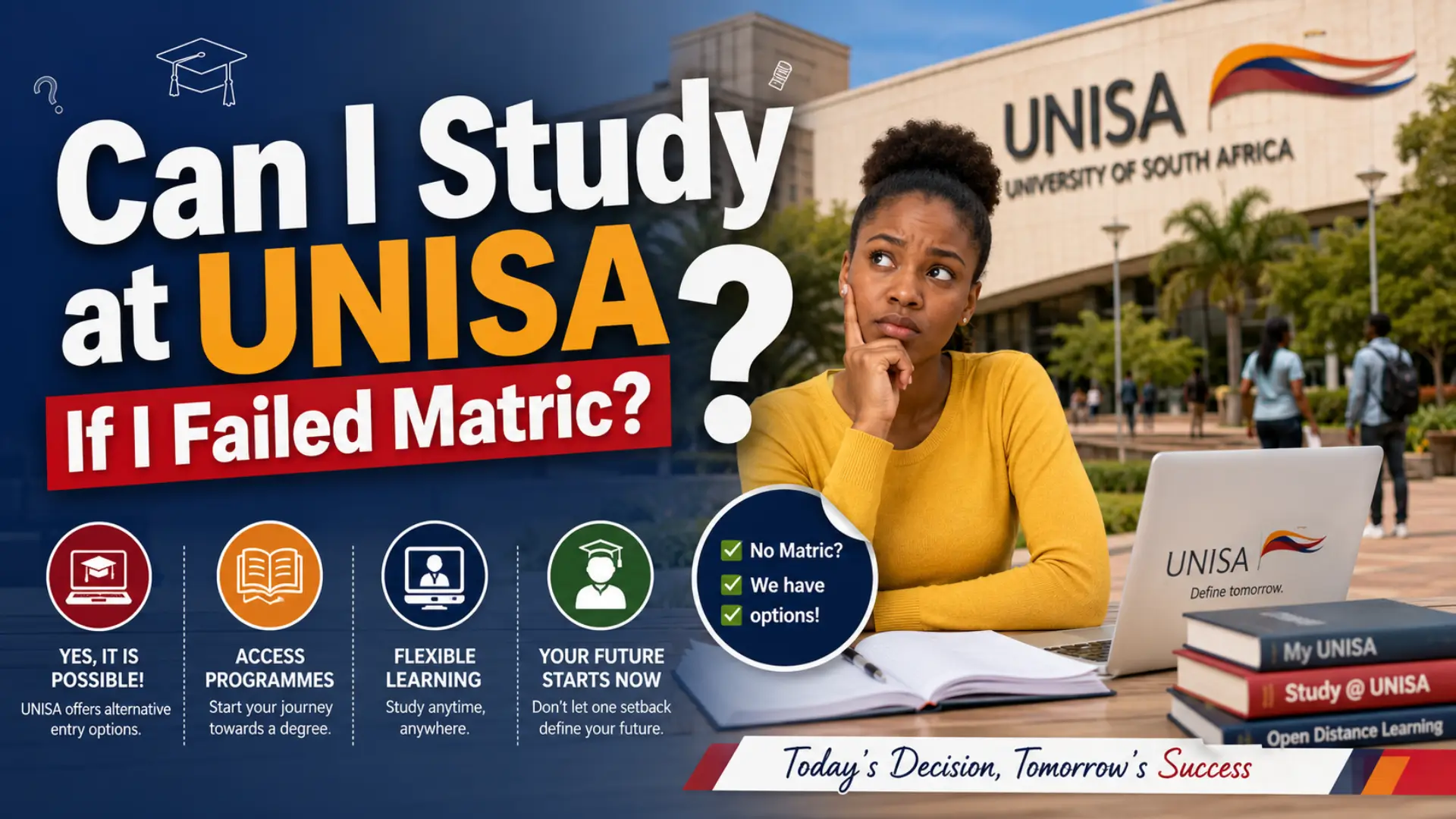
Study at UNISA If I Failed Matric. Failing matric can feel like a major setback, but it does not necessarily mean the end of your educational journey. Many students wonder whether they can still pursue higher education after not passing Grade 12. If you are asking, “Can I study at UNISA if I failed matric?”, the answer is yes. Depending on the qualification you want to study and whether you meet the admission requirements, there are several pathways available to help you continue your education.

The University of South Africa (UNISA) offers a range of study options designed to give students a second chance to achieve their academic and career goals.
Can You Study at UNISA Without Passing Matric?
Yes, it is possible to study at UNISA even if you did not pass matric. However, your admission depends on the specific entry requirements of the qualification you wish to study. While some degree and diploma programmes require a National Senior Certificate (NSC) with particular achievement levels, other qualifications have more flexible admission criteria.
UNISA provides alternative pathways that can help students who do not yet qualify for a degree programme.
Study Options Available If You Failed Matric
If you did not pass matric, there are several opportunities that may help you continue your education at UNISA.

1. Enrol in a Bridging Programme
Bridging programmes are designed for students who need to improve their academic skills before entering a higher qualification. These programmes help students build a strong foundation in subjects that are essential for university-level studies.

A bridging course can prepare you for future diploma or degree studies by improving your knowledge and academic readiness. Completing one successfully may increase your chances of qualifying for further studies.
2. Apply for a Higher Certificate
A Higher Certificate is one of the most popular options for students who do not meet the admission requirements for a diploma or bachelor’s degree.
These qualifications usually take one year to complete and introduce students to a specific field of study. Higher Certificates are available in various disciplines, depending on the programmes offered by UNISA.
After successfully completing a Higher Certificate, you may become eligible to apply for a diploma or bachelor’s degree, provided you meet the progression requirements.
Recognition of Prior Learning (RPL)
Another option available to some applicants is Recognition of Prior Learning (RPL).
RPL is a process that recognises the knowledge and skills you have gained through:
- Previous work experience
- Short courses
- Informal learning
- Industry training
- Other relevant educational experiences
If your experience is relevant to your chosen qualification, UNISA may assess your background and award academic credit where appropriate. This can reduce the number of modules you need to complete or strengthen your application for admission.
Admission Requirements Depend on the Qualification
It is important to understand that not every UNISA qualification has the same admission requirements.
For example:
- Bachelor’s degrees generally have higher entry requirements.
- Diploma programmes require specific minimum qualifications.
- Higher Certificates often have more accessible admission criteria.
- Short learning programmes may have different eligibility requirements.
Because every qualification is different, applicants should carefully review the admission requirements before submitting an application.
How to Choose the Right Study Path
If you have failed matric, choosing the right pathway is important for your long-term success. Consider the following steps:
- Decide which career field interests you.
- Research the qualifications available at UNISA.
- Compare the admission requirements for each programme.
- Consider starting with a Higher Certificate if you do not qualify for a diploma or degree.
- Speak with a UNISA admissions adviser if you need guidance.
Starting with an entry-level qualification can provide valuable knowledge and create opportunities for future academic progression.
Benefits of Studying Through UNISA
UNISA is one of Africa’s largest distance-learning universities, making it an attractive option for students from different backgrounds.
Some of the benefits include:
- Flexible online and distance learning.
- Study while working or managing family responsibilities.
- Wide variety of accredited qualifications.
- Affordable learning options compared to many traditional universities.
- Opportunity to progress from Higher Certificates to higher qualifications.
These advantages make UNISA an excellent choice for students looking for a second chance after not passing matric.
Tips Before Applying
Before submitting your application, keep these recommendations in mind:
- Carefully read the admission requirements for your chosen qualification.
- Prepare all required supporting documents.
- Apply within the official application period.
- Ensure your personal information is accurate.
- Explore alternative qualifications if your first choice is not available.
Being well-prepared can improve your chances of a successful application.
Conclusion
Failing matric does not mean your education has to end. UNISA offers several alternative pathways that allow students to continue learning and work towards their career goals. Whether you choose a bridging programme, enrol in a Higher Certificate, or qualify through Recognition of Prior Learning (RPL), there are opportunities to build your academic future.
The most important step is to research the admission requirements for your chosen qualification and select the pathway that best matches your current academic profile. With determination, careful planning, and the right qualification, you can still achieve your educational ambitions through UNISA.