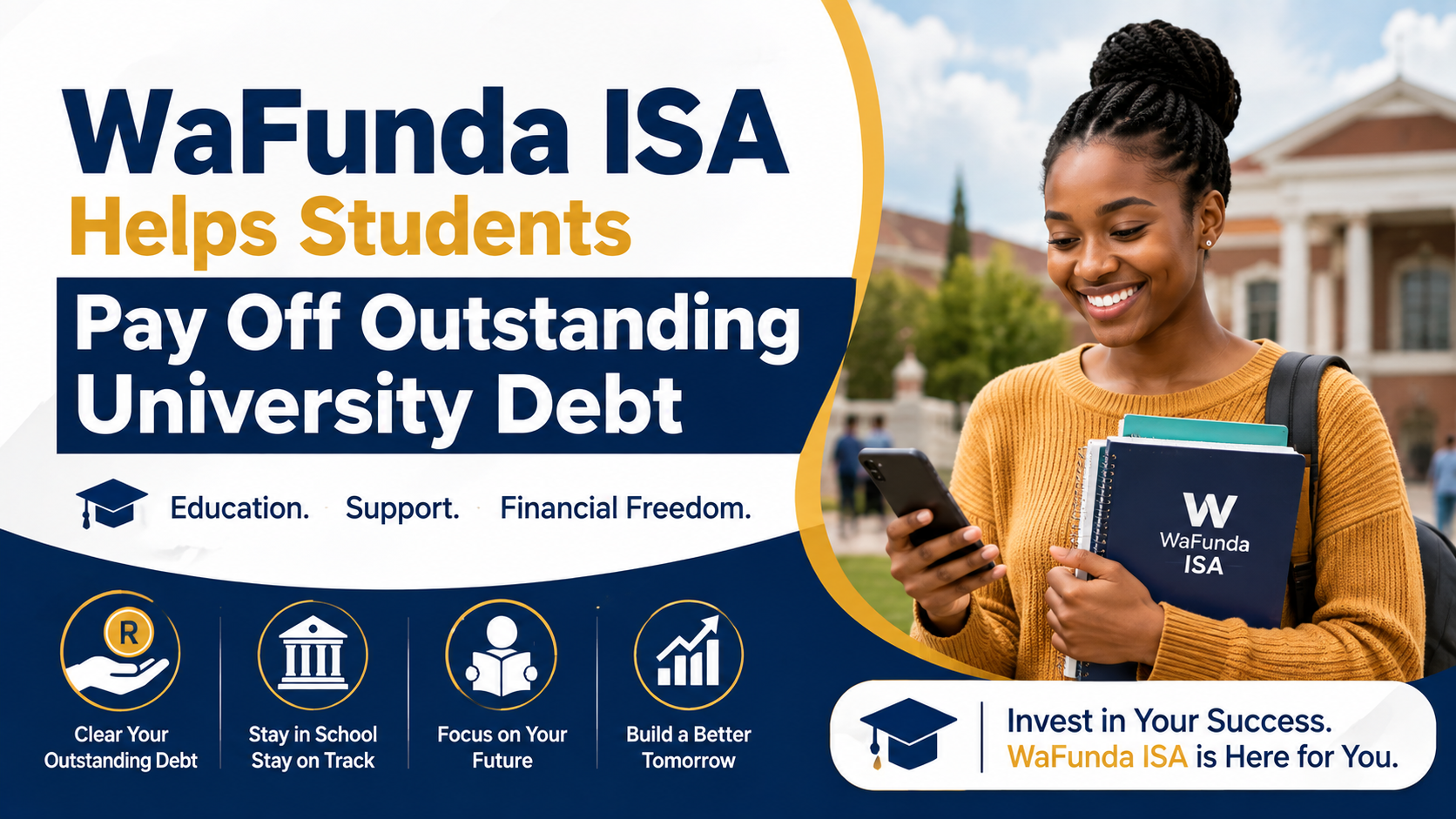
WaFunda ISA Helps Students Pay Off. For many South African university graduates, completing their studies does not always mean the end of their financial challenges. Outstanding university fees can prevent students from receiving their qualifications, even after they have completed their academic requirements. This can make it harder to enter the job market and begin building a career.

The WaFunda Income Share Agreement (ISA) offers an alternative funding option for eligible graduates who have outstanding university debt. Instead of requiring graduates to make immediate fixed loan repayments, the programme allows qualifying students to settle approved university debt and repay a percentage of their future income once they are employed and earning above a specified threshold.
What Is the WaFunda ISA?
The WaFunda Income Share Agreement is an alternative student-finance model designed to help eligible South African graduates deal with outstanding university fees.
Under the programme, approved university debt is paid directly to the student’s university. Unlike a conventional student loan, the graduate does not start making standard interest-based repayments immediately.
Instead, repayments are linked to the graduate’s future earnings. Once the graduate finds employment and earns above the required monthly income threshold, they begin repaying a fixed percentage of their net income.


This approach is intended to reduce the financial pressure graduates may face when transitioning from university into employment.
How Does the WaFunda Income Share Agreement Work?

The process is based on an income-sharing model.
First, an eligible applicant applies for funding and provides the required information and documentation. If approved, WaFunda settles the student’s qualifying outstanding university debt directly with the relevant university.
After graduation, repayment begins only when the graduate is employed and earns at least R7,000 per month, according to the programme information provided.
Rather than charging traditional fixed instalments based on an interest-bearing loan, repayments are calculated as a percentage of the graduate’s net income. This means the amount paid can reflect the graduate’s earning situation.
The programme also has a maximum repayment cap. If a graduate becomes unemployed or their income falls below the minimum threshold, repayments can be paused. However, a monthly service fee may apply while support services remain available.
Who Is Eligible for the WaFunda ISA?
Applicants need to meet specific requirements before they can be considered for the programme.
Based on the provided eligibility criteria, applicants must:
- Be a South African citizen or permanent resident.
- Have completed a university qualification in 2025.
- Have outstanding university debt between R15,000 and R200,000.
- Have an annual household income of R600,000 or less.
- For applicants with disabilities, the household income threshold is R850,000 or less.
Graduates who previously received partial bursary funding may also qualify if they still have outstanding university debt within the programme’s permitted funding range.
Applicants should always check the latest requirements before submitting an application because eligibility conditions and programme availability can change.
Which Universities Are Covered?
The WaFunda ISA is available to eligible graduates from selected partner universities.
The universities listed in the provided programme information are:
- University of Cape Town (UCT)
- University of Pretoria (UP)
- University of KwaZulu-Natal (UKZN)
- Stellenbosch University
- University of the Witwatersrand (Wits)
The programme information indicates that applications can be considered across different faculties and degree programmes at these institutions.
What Expenses Can WaFunda Cover?
The ISA can cover the approved outstanding balance shown on the student’s official university fee statement.
Depending on the student’s account and programme rules, eligible costs may include:
- Outstanding tuition fees
- University accommodation
- Books
- Study equipment
- Other approved university charges
Importantly, the approved funding is paid directly to the university rather than being transferred to the student as unrestricted cash.
Career and Financial Support
WaFunda’s support is not limited to helping graduates settle university debt. The programme also provides services intended to help participants move successfully from education into employment.
Support may include:
Financial Literacy
Participants can receive financial education designed to help them better understand money management and financial responsibilities.
Career Readiness
Career support can help graduates prepare for the workplace, including developing skills needed when entering the job market.
Recruitment Assistance
The programme may also provide recruitment-related support to help eligible graduates improve their employment prospects.
Student Support
Participants can access additional resources intended to support them during their transition from university to employment.
According to the programme model, repayments from graduates are reinvested into the ISA fund. This can help create funding opportunities for future students who face similar financial barriers.
Why the WaFunda ISA Is Important
Outstanding university debt can create a serious barrier for graduates who have completed their studies but cannot access their qualifications because of unpaid fees.
Without official proof of qualification, graduates may face difficulties when applying for jobs, internships and other career opportunities. This can create a cycle in which financial difficulties prevent graduates from accessing employment opportunities that could help them repay their debt.
The WaFunda ISA aims to address this problem by helping eligible graduates settle qualifying university debt and move forward with their careers.
The income-based repayment structure also means graduates do not begin standard repayments immediately. Instead, repayment is connected to their future earnings and starts once they meet the programme’s income threshold.
How to Apply for the WaFunda ISA
Students and graduates interested in the programme should first confirm that they meet the current eligibility requirements. They should then review the required documentation and application instructions provided by WaFunda.
Because programme conditions, participating universities and application requirements can change, applicants should rely on the latest information published by WaFunda before submitting an application.
The official programme information can be accessed through the WaFunda ISA website.
Conclusion
The WaFunda Income Share Agreement provides an alternative approach to dealing with outstanding university debt in South Africa. For eligible graduates, the programme can help settle approved university fees and remove a major financial barrier to receiving their qualifications.
Instead of traditional interest-based student-loan repayments, the ISA links repayments to future earnings, with repayments beginning after the graduate reaches the required income threshold. Alongside financial support, WaFunda also offers career and employment-related assistance designed to help graduates move successfully into the workforce.