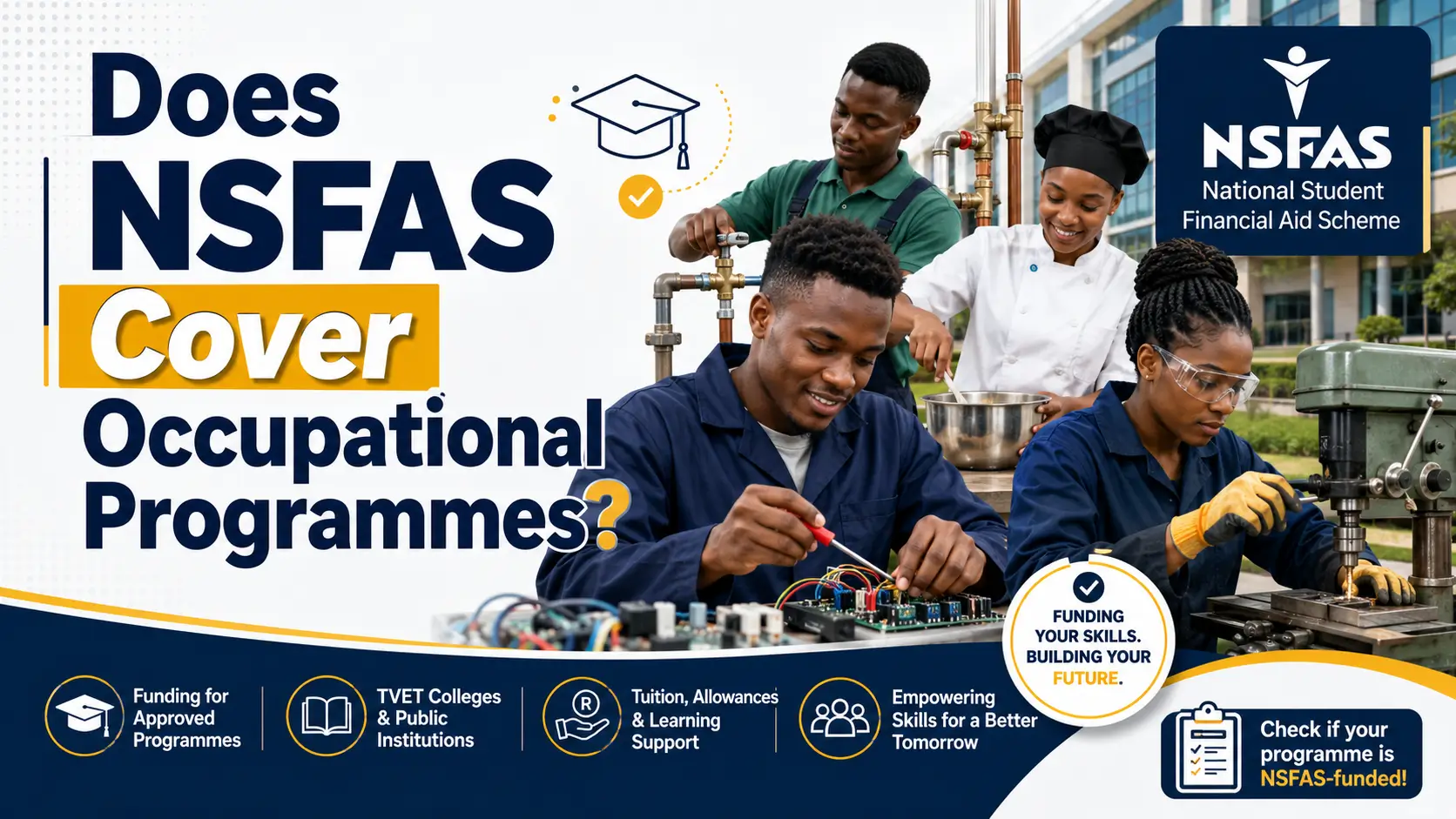
NSFAS Cover Occupational Programmes. The National Student Financial Aid Scheme (NSFAS) provides financial assistance to eligible South African students studying at public universities and TVET Colleges. If you are planning to enroll in an Occupational Programme at a TVET College, you may be wondering whether NSFAS will cover your studies.

The good news is yes, NSFAS does fund eligible Occupational Programmes, but the funding rules are slightly different from those that apply to traditional university or TVET qualifications.
What Are Occupational Programmes?
Occupational Programmes are practical, career-focused courses offered by Technical and Vocational Education and Training (TVET) Colleges. These programmes are designed to prepare students for specific occupations through a combination of classroom learning and workplace experience.
Unlike traditional academic qualifications, Occupational Programmes emphasize hands-on skills that employers need.
These programmes are gradually replacing the older NATED (N1–N4) courses, which are currently being phased out. Existing students may complete their NATED qualifications, but new enrollments are no longer being accepted for many of these courses.
Does NSFAS Pay for Occupational Programmes?
Yes. NSFAS covers eligible Occupational Programmes offered at public TVET Colleges.

For qualifying students, NSFAS generally pays:
- Full tuition fees
- Registration costs
However, the payment of student allowances depends on the nature of the Occupational Programme.
Will You Receive NSFAS Allowances?
Students participating in simulated training as part of their Occupational Programme may qualify for additional NSFAS allowances, including:
- Accommodation allowance
- Transport allowance
- Learning materials allowance
- Personal care allowance
These allowances help students manage the costs associated with their studies.
When Are You Not Eligible for Allowances?
If you are completing an Occupational Programme under an employment contract and already receive a stipend or salary, you will generally not qualify for NSFAS allowances.
Although your tuition may still be funded (if eligible), additional living allowances are usually not provided because you are already receiving financial support through your employer.
NSFAS Eligibility Requirements for Occupational Programmes
To qualify for NSFAS funding, applicants must:
- Be a South African citizen.
- Be registered for an Occupational Programme at one of South Africa’s 50 public TVET Colleges.
- Demonstrate financial need.
- Have a combined household income of R350,000 or less per year.
Meeting these requirements does not automatically guarantee funding, as all applications are assessed according to NSFAS policies.
2026 NSFAS Application Dates
NSFAS has confirmed the application period for second-semester Occupational Programme funding at public TVET Colleges.
Application Opens: 1 July 2026
Application Closes: 17 July 2026
Students are encouraged to submit their applications before the closing date to avoid missing out on funding opportunities.
Conclusion
NSFAS continues to expand access to vocational education by funding eligible Occupational Programmes at public TVET Colleges. While tuition and registration are generally covered for qualifying students, allowances depend on whether the programme involves simulated training or whether the student receives a workplace stipend.
If you meet the eligibility requirements, applying for NSFAS funding can significantly reduce the financial burden of gaining practical skills and preparing for a successful career in South Africa.